Answering the call of our inner genius
Being ahead of a social media trend is the most vindicated I’ve felt my entire adult life. It wasn’t the fact that I graduated from college and went on to pursue a high-paced marketing career. Or the fact that I moved to one of the most vibrant, bustling metropolitan cities in the continental US with nothing but a wild dream to see me through.
Nope, none of that. It is this – being ahead of a TikTok trend years before it was actually a thing.
Let me explain.
I’ve always felt deeply connected to most things I come into contact with. A good book, a moving film, or a thought-provoking piece of art will send my mind into a deep meditation where I contemplate the existence of the very thing that sent me into such a state. I’ll take these thoughts, crank up my ever-evolving Neo-Soul inspired playlist, and follow these curiosities down a rabbit hole in an attempt to answer the big questions that evolve, jumping from one thought to the next thought continuing the journey of deep contemplation that, thankfully, has no end.
This in a nutshell is the idea of the thought daughter.
The thought daughter or thought son was a phenomenon that materialized at some point in 2024 on TikTok. The idea defines these unique individuals who relish time spent with books, music, film, welcoming soft moments of deep contemplation about anything. If you take a gander on TikTok, you’ll find more than a handful of thought pieces explaining the term from self-proclaimed thought children, as I like to call us.
Upon my own discovery of the trend – while I was tickled by the fact that I was already doing this before ‘this’ was even a trend – I had a different take entirely. To me, the concept of a “thought child” is nothing new. We have evidence of them all throughout history, asking big questions and following their curiosities to discover the answers. Each one of them melting into their wondrous, deep curiosities, that display a certain type of genius at work.
In his book, The Hidden Habits of Genius, author Craig Wright investigates what it means to be a ‘genius’. The term itself, while it does have a formal definition, has evolved into a subjective term used to describe the uniqueness in an individual even if they may not fully exhibit the qualities that would encapsulate the idea of ‘genius’.
In his work, Wright offers examples of masters throughout history to help examine what would make each unique and what qualities they all shared. One of the main qualities being that of curiosity.
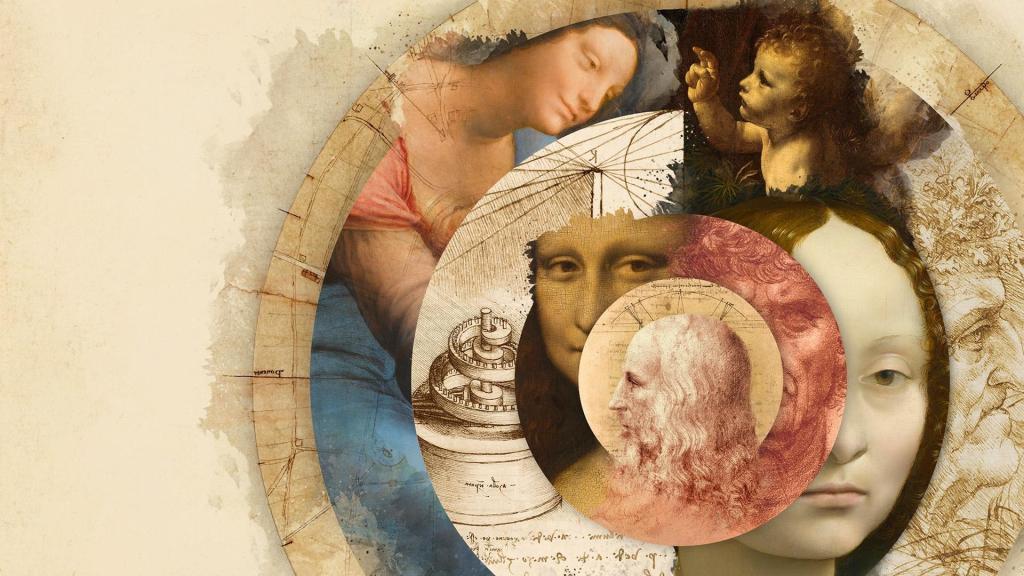
One of the most famous examples of genius is found in the work of famed polymath Leonardo Da Vinci. Da Vinci didn’t start out as such, of course. He didn’t have a formal education like one would expect – he was mostly self-taught. He was simply curious about everyday things, such as how the human heart worked or how birds were able to take flight. He simply relied on his curiosity to guide him through his studies, resulting in the creation of a body of work that astonishes us even today. The Mona Lisa, the Vitruvian Man, and endless sketches of various inventions were all a product of his passion for learning and applying that learning to create something divine.
In my study of understanding Da Vinci and the idea of ‘genius’, I’m reminded of a modern-day thought child named Heman Bekele. At the age of 14, Bekele has done the most ingenious thing – taking an idea that sparked a curiosity which led to the discovery of something remarkable. Inspired by his early life in Ethiopia, seeing how frequently people spent their time working outdoors exposing themselves to the harsh rays of the sun, this young scientist wanted to find a way to combat skin cancer in a delivery system that was accessible and affordable. A simple curiosity led this young man with breadcrumbs to find solutions that can change the world.
We can all learn from Bekele, Da Vinci, and countless other thought children, who are unapologetic in their passions and their courage in following a path most others wouldn’t dare. Da Vinci believed his duty was to the question itself, dedicating his efforts to answering this call to unlock mysteries that compelled him.
All of us thought children share this same duty. Our deep contemplation is an invitation, coaxing us to excavate the truth of the mysteries holding our minds captive. We must proceed with the inquiry to arrive at the discovery. We may not always change the course of history, but there’s still magic to be found in our own everyday worlds.
Your curiosity is your compass. Don’t be afraid of it.

 Sips + Quill
Leave a comment