Your reminder to slow down and take in the scene around you.
I took myself on a date to the Metropolitan Museum in NYC. I wandered to the Superfine: Tailoring Black Style exhibit, having put it off since it opened. Then afterward, I ventured in and out of galleries, feeling I rarely spend time in them when I normally visit the Met.
I wandered into the Met’s European galleries, where the likes of Degas, Monet, and others live. I was making my way out of one gallery and onto the next when I was struck by this painting and sat with it for a moment, taking in the scene.
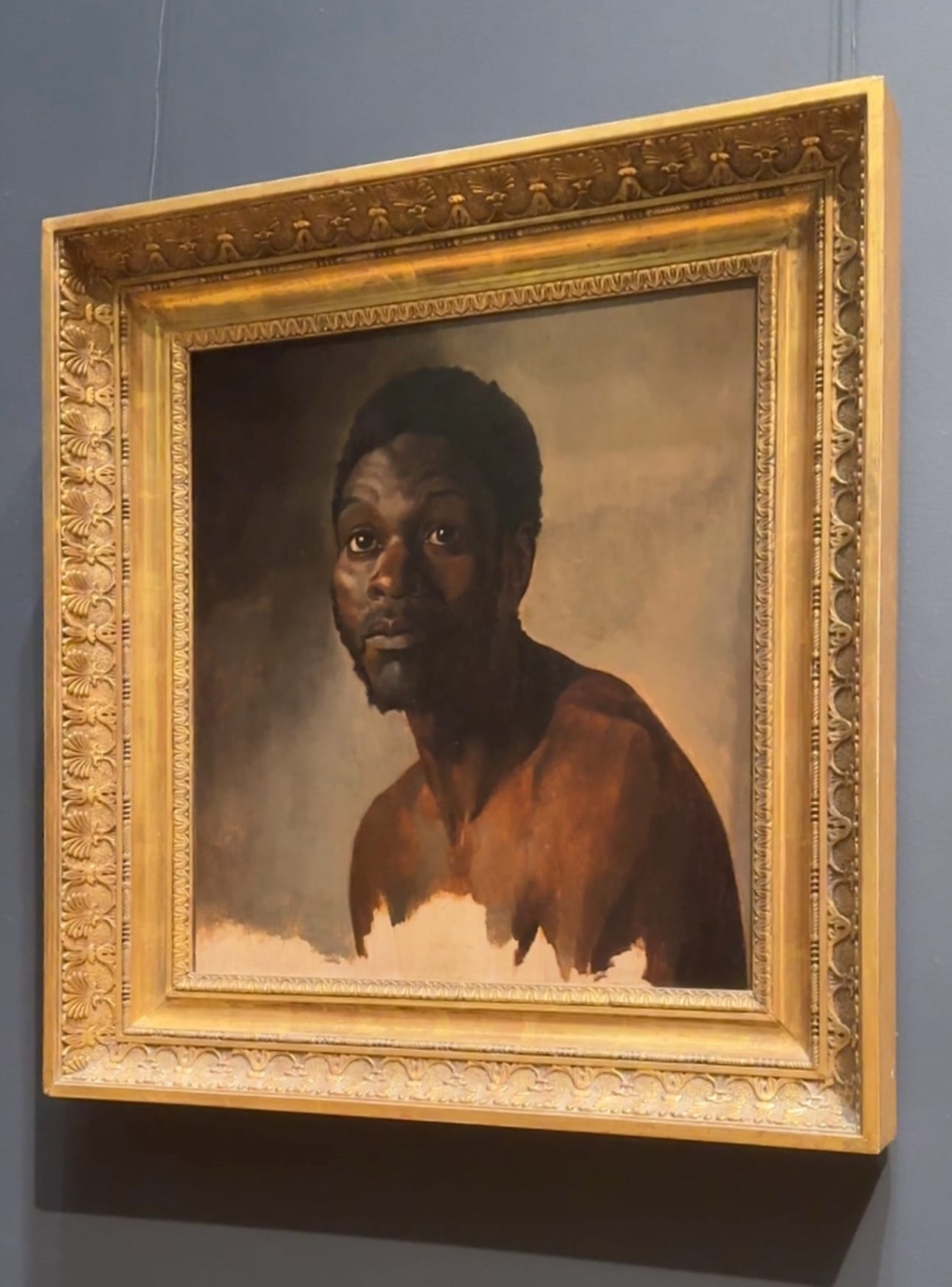
The eyes caught me instantly, drawing me towards it. The depiction is rather simple, the man is not depicted against a dramatic landscape or societal scene, but presented to us just as he is, keeping our eyes focused on him. The artist, Francois-Auguste Biard, presents a man who appears calm, his eyes present with a hint of curiosity as he watched Biard’s process unfold behind the canvas.
As I continued to look into his gaze, I couldn’t help but wonder what he was thinking during this moment as Biard probably flitted about the studio, positioning him just right to get the lighting to focus on the details of his face, his expression, mixing his paints to get the right tones. I wondered who he was, where he came from, and why Biard chose him over someone else to focus on.
Unfortunately, the identity of the man is not known, but he was likely used as a study for a larger piece Biard might have been preparing for at the time.
I was curious why Biard chose to depict a Black man, given Black representation in art has either been distorted or absent throughout history. This is also the first time I’ve seen any sort of Black representation in this particular gallery. My curiosity was truly piqued.
Quick research brought me the answers I was seeking. I discovered Biard painted this the same year the French abolished slavery, after being reintroduced by Napoleon in 1802. Biard was staunchly against slavery, this being one of the key themes he visited often in his work.

He traveled widely throughout his life and was able to see the effects of slavery firsthand, and used his art as a form of protest, receiving acclaim from key abolitionists at the time. He was even commissioned to develop some pieces depicting the slave trade, one of which was a depiction of its abolition in France, seen in his piece “Proclamation of the Abolition of Slavery in the French Colonies on April 27, 1848”.
The painting is a recent acquisition by the Met, hidden among the glamour of Manet and the other masters of the 19th century. I almost didn’t notice it as I was hurriedly making my way out of the gallery. The piece called out to me as I was passing it, beckoning me to slow down and stay a while longer.
It was a nice reminder that beauty is often found when we take time to slow down and take the time to appreciate what’s around us. ✨

 Sips + Quill
Leave a comment